Sign in
 Sign up





How to make money from real estate in Barcelona: investment strategies, market analysis and forecasts for the coming year. Short-term versus long-term rental property in Barcelona: which brings higher returns?
The real estate market in Barcelona showed positive trends throughout 2025. In August 2025, the average price of resale housing in Spain increased by 14.8% year-on-year, reaching EUR 2,498 per square metre. Meanwhile, the capital of Catalonia ranked fifth among the provinces with record-high prices. The average cost per square metre here rose by 10.5% over the year and hit EUR 3,023 in August 2025. By November, the figure had risen to EUR 3,084.
Real estate price trends in Barcelona are driven by high demand, a stable economic environment in Spain and increased housing construction activity. All of this indicates that today, property in Barcelona is an excellent tool for both preserving capital against inflation and generating profit.
Content
Benefits of investing in Barcelona real estate
- Stable demand. Barcelona is not only a popular tourist destination with a peak season from May to October, but also a major centre for business and academia. The region experiences a steady flow of holidaymakers, students, professionals and expatriates. Consequently, the demand for rental accommodation remains high.
- Good liquidity. Barcelona and its nearby municipalities provide a well-balanced mix of seaside lifestyle and contemporary urban amenities. This attracts both local residents and international buyers. Since July 2024, the number of transactions with apartments and villas in Barcelona has been steadily increasing.
- Capital appreciation potential. Limited supply coupled with rising demand from both foreign and domestic buyers supports continued real estate earning potential in Barcelona.
- Diverse investment strategies. You can rent residential or commercial properties and buy older homes to renovate and resell for a profit.
- Investments in a stable European currency provide portfolio diversification for international investors.
- Availability of credit and management services. Local banks offer mortgages for buying houses or flats, even to foreigners. Investors can also depend on property management firms to handle tenant searches, cleaning and maintenance.
What is the rental yield in Barcelona in 2025?
The average gross rental yield in Spain in Q3 2025 was 5.43%. In Barcelona, however, investors can expect higher returns. The average annual income from renting out apartments here reached 7.17%. Profitability depends directly on the property's location.
Let's look at how you can make money from real estate in Barcelona based on different neighbourhoods.
| Neighbourhood | Yield |
|---|---|
| Ciutat Vella | 6.27 to 8% |
| Sants-Montjuïc | 5.6 to 8% |
| Horta-Guinardó | 7.38 to 7.88% |
| Eixample | 5.12 to 7.72% |
| Sant Martí | 5.51 to 7.7% |
| Gràcia | 5.44 to 7.48% |
| Sarrià-Sant Gervasi | 3.3 to 6.64% |
Rental income in Barcelona also depends on the type of property. In Q3 2025, the following trends were seen:
| Apartment type | Yield |
|---|---|
| Studio | 8.56% |
| 1-bedroom apartment | 7.39% |
| 2-bedroom apartment | 7.17% |
| 3-bedroom apartment | 7.04% |
| 4+-bedroom apartment | 5.68% |
In November 2025, the average rental price in the province reached EUR 20.6 per square metre. In the city, it traditionally remains higher at EUR 24 per square metre.
Over the past three years, rental rates have risen both in the city and the province. From November 2024 to November 2025, prices increased by 4.4% in the province and by 3.4% in the city. This is due to high demand and a shortage of supply.
Therefore, to make income from short-term rentals in Barcelona, it’s important to choose a district with stable demand and higher rental rates. It's also worth noting that studios and small apartments offer the highest profitability.
Investor checklist before buying
- Investment goal
- Choose your strategy: whether it’s a long-term or short-term rental or a commercial property.
- Define your investment horizon, expected return and payback period.
- Location analysis
- Based on location: infrastructure, landmarks, transportation, safety, schools and hospitals.
- Based on development prospects: city plans, new projects and transport network expansion.
- Based on competitors: price levels and occupancy rates of similar properties.
- Market indicators
- Average rental rate for your segment.
- Seasonality of demand and expected occupancy.
- Vacancy risk assessment.
- Profitability calculation
- Calculate annual gross income using this formula: expected monthly rent × 12.
- Sum all annual expenses: taxes, utilities and fees, insurance, property management, maintenance and repairs, vacancy reserve and other costs.
- Calculate net annual income: gross annual income − annual expenses.
- Calculate return on investment as a percentage: (net annual income / total investment) × 100.
- Legal check
- Order a property registry extract (Nota Simple Informativa) and check for encumbrances or liens.
- Confirm whether there were any alterations to the layout and if they are legally approved.
- Permits
- Check for existing or potential licences and permits. From 1 July 2025, short-term rentals in Spain face stricter regulation. Barcelona imposes specific restrictions on tourist rentals in certain areas. To list your property on popular booking platforms, the owner must obtain two documents: a regional tourist licence (VUT/HUT/ETV) and a national identifier (VUD) registered on Spain’s digital portal.
- If the apartment is part of a homeowners’ association, be aware that some may impose restrictions on renting.
- Technical condition
- Check the condition of the roof, foundation, walls, windows, electrical system, plumbing and heating/air conditioning.
- Assess whether repairs are needed and calculate estimated costs.
- Check for an energy performance certificate. Since 2013, this document has been mandatory for landlords in Spain. It rates a property's energy efficiency from A (highly efficient) to G (low efficiency).
- Property management
- Select the type of management: self-managed or through a property management firm. If using a firm, factor in their service charges as part of your expense estimates.
- Decide how tenants will be screened and selected, draft a rental agreement with or without a lawyer and set the deposit amount and payment terms.
- Select and arrange insurance coverage (property, landlord liability, income loss, etc.).
- Tax aspects
- Don’t forget about real estate investment taxes in Barcelona for investors: purchase tax (ITP for resale, VAT for new builds), capital gains tax upon sale and income tax from rental revenue.
- Spanish residents may be eligible for certain tax deductions.
- Risks and exit plan
- Assess risks: legal, market, technical and macroeconomic.
- Define an exit strategy: expected sale timeline, potential liquidity and pricing.
Real estate investment in Barcelona and resale
One of the most popular investment strategies in Spain is flipping. This involves purchasing a property with the intent of reselling it after renovation. Typically, properties in older buildings are bought, renovated and sold at a profit.
Key advantages of this strategy include property appreciation following renovation and overall market price growth. In Spain, property prices increase by an average of 1.3% each quarter.
Investors who choose to flip properties should focus on prime locations. When planning renovations, it’s important to consider buyer preferences. For example, a home with a bold, unconventional design will be less liquid than one in a modern, minimalist style. Before investing, it’s best to consult experienced estate agents who can advise on which types of properties are worth buying and which are better avoided. With the right approach, flipping can generate returns of up to 27%.
What factors affect real estate ROI in Barcelona?
- Location. Central neighbourhoods are popular with tourists (like Gràcia, Ciutat Vella, or Poblenou) and properties near the sea or the metro significantly increase profitability and liquidity.
- Strategy type. Short-term rentals generate high income but require active management and involve more risks. Long-term rentals are more stable but less lucrative. Flipping can be highly profitable but demands thorough market analysis.
- Condition and age of the property. New or renovated homes attract more tenants and require less immediate investment.
- Spain’s economic and political climate. Tourism levels, legal changes and the general economy influence demand and pricing.
- Taxes, notary fees, utility bills, insurance and other expenses related to Barcelona property maintenance reduce net profit.
Top profitable neighbourhoods for investment
Ciutat Vella is in the historic city centre with high tourist traffic. There is strong demand for apartments here and rental rates are traditionally high.
-
€ 450 000
- USD $
- RUB ₽
- NOK kr
- GBP £
- EUR €
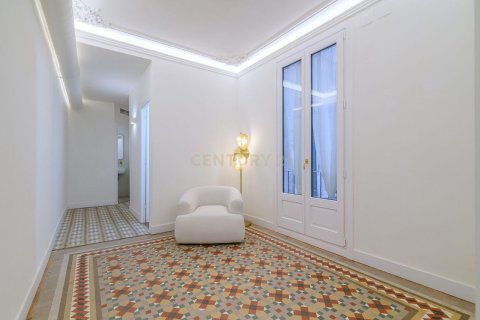 Bedrooms: 2Bathrooms: 2Living space: 95 m²
 -
€ 459 000
- USD $
- RUB ₽
- NOK kr
- GBP £
- EUR €
 Bedrooms: 2Bathrooms: 2Living space: 74 m²


Sants-Montjuïc is a former industrial district that has undergone redevelopment. Located by the sea, it combines historic streets with modern buildings. This area offers many investment options like new residential complexes, business centres, co-working spaces and warehouses.
Horta-Guinardó is a picturesque and quiet neighbourhood located slightly further from the city centre. It is attractive due to its affordable prices and steady demand from families and young professionals.
Eixample is one of the most prestigious neighbourhoods in the city with excellent infrastructure and many premium-class buildings. Investors value it for its high liquidity.
Sant Martí is a coastal district with many modern apartment buildings and business centres. A stable flow of tenants ensures high rental yields.
Gràcia is a family-friendly community with many schools, kindergartens, parks and a unique atmosphere of an old Spanish village. Its main advantage is consistent demand from local families and expats.
Sarrià-Sant Gervasi is a prestigious district offering a blend of peaceful suburban life and quick access to the city centre. It’s an excellent location for purchasing luxury houses and apartments. Investors can count on stable returns, although the entry threshold is higher.
Less profitable areas for rental income
Nou Barris is not a popular location among tourists, so rental rates here are lower compared to central and coastal areas.
Sant Andreu is a mostly residential, family-oriented area with moderate rental prices. It’s a good option for stable income but don’t expect high returns.
Zona Franca is an industrial area by the sea. Its proximity to industrial zones reduces demand for apartments.
Suburban and peripheral areas (upper hill sections, remote neighbourhoods) are distance from the city centre and public transport hubs, which increases the risk of vacancies and reduces rental rates.
Always review development plans for a particular district. Infrastructure projects can turn previously unattractive locations into promising investment opportunities.
Associated costs and taxes
- One-time costs at purchase:
- New properties: VAT (IVA) + stamp duty (AJD) is 10% + 3.5%
- Resale properties: Property transfer tax (ITP) is 10% to 13% of the deal amount
- Notary and registration fees depend on price and document volume
- Agency commission is traditionally paid by the seller but is sometimes partly borne by the buyer
- Bank fees need to be considered when taking out a mortgage
- Legal services (gestoría): Foreign buyers usually hire lawyers to ensure the deal is secure
- Annual and recurring costs:
- IBI (municipal property tax) is annual, based on cadastral value
- Garbage collection fee (Tasa de residuos) and other municipal charges
- Homeowners’ association fees (comunidad) if the property is in a condominium
- Property insurance and, if needed, loss of rental income insurance
- Maintenance and repairs
- Property management company fees, if applicable
- Income taxes:
- Taxes on rental income Barcelona for Spanish tax residents is included in personal income (IRPF) and taxed progressively from 19% to 47%. For non-residents, the IRNR tax rate is 19% for EU/EEA citizens and 24% for others. Maintenance, repair and mortgage interest costs are often deductible. It’s advisable to consult a tax advisor for specifics.
- Capital gains tax upon sale: rates and deductions range from 19% to 26%, depending on the holding period and taxpayer status.
- Wealth tax (Impuesto sobre el Patrimonio) may apply to individuals with significant net assets, from 0.2% to 3.5% depending on total net worth.
- Tourist rental income tax in Barcelona is a tourist tax, which is usually paid by the tourist themselves.
Potential real estate investing risks in Barcelona
When developing an investment plan, it's important to consider the following possible risks:
- Seasonal demand: vacancies between tenants and fluctuating income
- Low liquidity due to poor location
- Hidden legal issues: unregistered alterations, encumbrances and neighbour disputes
- Rising operating costs: utilities, repairs and insurance
- Incompetent contractors: poor renovation and inflated budgets
To reduce risks, buyers should carry out due diligence before purchasing. It’s also recommended to engage local tax advisors and legal experts familiar with Spanish law. Furthermore, when developing an investment strategy, it’s important to allocate a reserve for vacancies and repairs.
Who can earn from real estate in Barcelona
- Owner of an apartment or house for long-term tenants (local families and office workers). They receive stable income with minimal risks, regardless of residency status or citizenship.
- Owner of short-term rental property. Produces higher profits but demands effort and resources to secure permits and oversee the property.
- Developer. Earns through the construction and resale of new projects. Needs significant capital and a solid understanding of the local market.
- Flipper. Buys properties at a lower price, renovates and resells at a profit.
- Owner of offices, retail stores or warehouses. Income depends on the business environment and economic conditions.
- Investor pool/funds/crowdfunding platforms. These collective structures allow investors to enter the market with smaller capital and benefit from professional management.
Real estate market outlook in Barcelona
By 2025, Spain will be ranked second among European countries for expected overall investment returns, behind only the UK. Specifically, Barcelona will be ranked fourth among the most attractive cities for cross-border investments.
The most popular sector for capital investment was residential real estate, followed by logistics and office spaces, with retail properties and hotels coming next.
According to forecasts from BBVA Research, 2026 will bring continued housing price growth in Spain along with increased buyer demand. Key drivers include:
- job creation
- wage growth
- relatively low mortgage interest rates
- a growing share of foreign buyers
An upswing is also expected in the new-build market.
However, even this growth will not be enough to fully meet the accumulated demand. Due to the ongoing imbalance, price increases per square metre are expected to continue. Analysts estimate a further 7% rise in 2026.
Barcelona.RealEstate is a property aggregator featuring houses and apartments in Barcelona for foreigners looking to relocate to Europe and acquire a profitable investment asset. Experienced specialists will help you find the right property for your needs; simply submit a request to receive a consultation at your convenience.
Frequently Asked Questions
In Q3 2025, the average gross rental yield for residential property in Spain was 5.43%.
Yes, it is. The region is one of the most attractive for both living and vacationing. Owners of rental apartments can expect an average annual yield of 7.17%.
To secure profitable investments, it’s best to select areas with the highest average rental yields. These include Ciutat Vella, Sants-Montjuïc, Horta-Guinardó, Eixample, Sant Martí, Gràcia and Sarrià-Sant Gervasi.
- For long-term rentals with low risk: apartments in prestigious neighbourhoods like Eixample, Sarrià-Sant Gervasi, Gràcia or other well-connected areas with good infrastructure.
- For short-term rentals: apartments in Ciutat Vella, El Born and Barceloneta but these require licenses and permits.
- For student rentals: studios or rooms near universities (zona Universitària or Poblenou).
- For limited budgets: easy-to-manage parking spaces and small storage units.
- For diversification and reduced operational involvement: shares in investment funds or crowdfunding platforms.
No, residency status is not required. However, to complete a property transaction, you must obtain a NIE (foreign tax identification number). It is also advisable to open a Spanish bank account to facilitate payments, taxes and potential mortgage arrangements.
Yes. Mortgages are also available to non-residents, though the terms are usually less favourable: higher down payments, higher interest rates and stricter income verification.